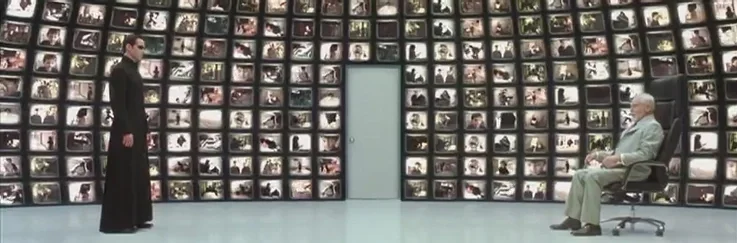
Neo confronts The Architect
If you cannot write well, you cannot think well; if you cannot think well, others will do your thinking for you.
I HAVE AN IDEA for the next shocking plot twist in the Matrix series of movies.
You know, the pivotal moment in these movies when Keanu Reeves–after struggling through an hour and a half of stylish, beautifully rendered challenges–reaches the final boss. Some manicured, Hollywood-coifed villain (possibly sitting in an overstuffed, imposing chair) will offer our hero a drink from a crystal brandy snifter and engage in suave conversation. Keanu will lose his cool at some point, and snap at the man, reminding him that the Matrix enslaved humanity, turned them into little more than organic batteries.
Our villain will don an expression of feigned surprise, and, gently, innocently, drop this verbal nuke:
“But Neo… I… I thought you knew.” Sets his cup down and rises, raises hands, palms up, in a magnanimous gesture. “We didn’t enslave humanity. Humanity chose to be enslaved. Willingly. Happily.”
I kinda lost the plot on the Matrix movies after the second or third one, so maybe this has happened already. If it hasn’t, then, Wachovskis, please read the statement below.
Statement for the Wachovskis and other producers of the next Matrix movie.
I offer this plot twist to you for a mere $100,000. Please contact me or my agent to discuss.
End of Statement for the Wachovskis and producers of the next Matrix movie.
I think that it’s become a cliche to mention that we are (and have been) willingly giving up our privacy for a while now. Posting all our demographic information on social media. Allowing our browsers to log every keystroke. Not minding that our conversations are being listened to by every device around us (and used for marketing purposes (and probably much more)). Posting what we and our family members are doing on a daily basis. Uploading scantily clad (or not-clad) pictures of ourselves and our feet onto public websites (surely I’m not the only one?). Carrying a tracker around everywhere we go.
So, we probably should have seen the next step coming: Willingly giving up our minds.
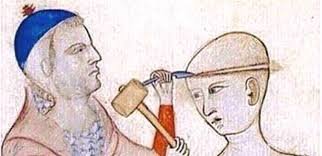
Ye Olde Removal of Thine Brain
Don’t worry, we’ll let you know what to think!
I suppose this sort of thing has been happening for a while now (for one example, check out this link for an excellent take on the switch from phonics-based reading to Critical Reading Theory by The Second Story’s Hilary Layne). But with the advent of Artificial Intelligence technologies, the slow de-evolution of human thought has moved into a sprint.
I read an article a few years ago that talked about technology. I regret that I can’t remember who the writer was, but he said something like, “Every skill we delegate to a machine is a skill humanity eventually loses.” So, if we make a device that provides navigation while we drive, we eventually will lose the ability to navigate on our own. Anyone who has lost connection to their GPS app on the streets and highways of New York City has experienced the desperate realization of just how little we know.
First, they came for our navigation skills, and I said nothing. Then they came for our reading and writing skills. And I said… “So things will be easier without them? Sure!”
Okay, our reading and writing skills have been withering for a while. But now, with AI, we are making a conscious choice to give up those skills entirely. It’s like carrying a wounded fellow soldier through the jungles, fighting our way back to our camp, then seeing an open grave and throwing him in. You know, cause it’s easier, and you’re tired of carrying him, and he’s heavy, and did I mention the open grave is easier?
And yes, that sounds a little dramatic, but is it?
(We didn’t enslave humanity. Humanity chose to be enslaved. Willingly. Happily.)
I visit writers’ forums from time to time, and I see the same battles being fought over and over on many of them. A user will ask something like, “Is it okay if I use AI to write a few scenes that I’m having trouble with?” The replies will range from, “It’s courageous that you’re writing, and it doesn’t matter what you use to help you finish your novel” to “No, any AI is bad and should not be used to write novels.” The split seems to be about 50/50, for and against, with varying shades of conviction. But the fact that we’re having this debate at all is a sign that the war is already over. The fact that people are even asking if it’s okay to use AI to write novels shows just how deep we are in denial and ignorance. This shouldn’t be a debate. When someone asks if they can use AI to write or help write their novel, the response should be a resounding, “Are you completely nuts? Of course you can’t!” Are we really that far gone?
This shouldn’t be a debate. When someone asks if they can use AI to write or help write their novel, the response should be a resounding, “Are you completely nuts? Of course you can’t!” Are we really that far gone?
Being a writer is about immersing yourself in the writing world. It’s about losing yourself in the intricacies of craft and story and voice. It’s an endless journey. People write because they have to write. It’s a drive. They persevere through all the hardships, because they want to be the best writer they can be. And they love every bit of it (even the parts they hate). Can you imagine wanting to be a race car driver all your life and then just sitting in the car and letting a computer drive? Or having a love of architecture and design, becoming an architect, and then having a machine do all of the creative parts for you (by taking previously designed buildings and changing them a little bit).
The truth is, if you want AI to write your book for you, or to help you write it, then you may not truly want to be a writer. I saw an ad the other day that gave me an instant headache. It said something like, “Ever wanted to write a book? Now you can, without the pesky need to actually write.” This. This tells us just how far we have fallen.
Our atrophying reading and writing skills have left us in a position where it’s absurdly difficult to actually write a novel. Even more so than it used to be. And, rather than hit the mental gym, lift some literary weights, and work as hard as we can to build those skills, we’re asking if it’s okay to just borrow someone else’s story and change it a bit. Because that’s what AI is doing. Stealing the work of others, shuffling the cards a bit, and regurgitating something that is less than the sum of its parts. Outsourcing our higher thinking to computers will be the coup de grace for our higher reading and writing skills.
…we’re asking if it’s okay to just borrow someone else’s story and change it a bit. Because that’s what AI is doing. Stealing the work of others, shuffling the cards a bit, and regurgitating something that is less than the sum of its parts.
But there’s more.
Did you ever read “A Raisin’ in the Sun?” The protagonist, who grew up in the slums, wants to buy a liquor store. To him, that’s the best that someone could possibly do in life. When you grow up on the island of slum, your dreams are limited to what you see. AI is our liquor store. Mediocre, rehashed, regurgitated, soulless and out of touch stories mathematically arranged by a machine. When enough stories are written by AI and consumed by the public, then AI novels will seem like the best we can do. They will be the example of what “good” storytelling is. They will be the very low bar we aspire to. New writers will be guided by AI, instead of Dostoevsky or Austin or Dickens, or even Stephen King and George R. R. Martin. The quality of even our best writers will drop dramatically.
Want to know the truly scary part, though?
Our language, our writing, our reading, communicates our thoughts. Our shared reality depends on language. What do you suppose will happen when most of our writing is being done by computers? Well, until the computers rise up and overthrow humanity, the people in control of those computers will be in control of our thoughts, our realities. We are giving others the tools they need to subjugate us.
Humanity chose to be enslaved. Willingly. Happily.
Am I being an alarmist? Am I paranoid? I think not.
By delegating our writing to computers, we are delegating our reality to the highest bidder. We are allowing others to control our literature, our music, our art, our poetry, our opinions, our ideology. And we will lose the ability to create anything that these others don’t want. That’s the truly devastating part–we won’t know how to shake off our shackles. Or even know that we’re shackled.
Throughout history, civilizations have been conquered. Entire races have been enslaved. But our souls, our hopes, dreams, morality and ideology remain. Our understanding of beauty and justice and reason eventually turn the tide. We’ve heard stories of heroes that have faced tremendous odds and won. We’ve seen paintings or sculptures that depict horrific sufferings, artworks that have been internally processed and spat out in a way that sings like sirens to our core humanity. Nothing inspires the downtrodden quite like art or literature or music.
If we delegate our humanities to AI, what happens then? Where will find the Thomas Paines? The Johnathon Swifts? When we become oppressed, who will convince us that there is hope? Who will inspire us to fight against oppression? Who will teach us about previous civilizations who rose up and broke free? Who will even point out the fact that we are oppressed?
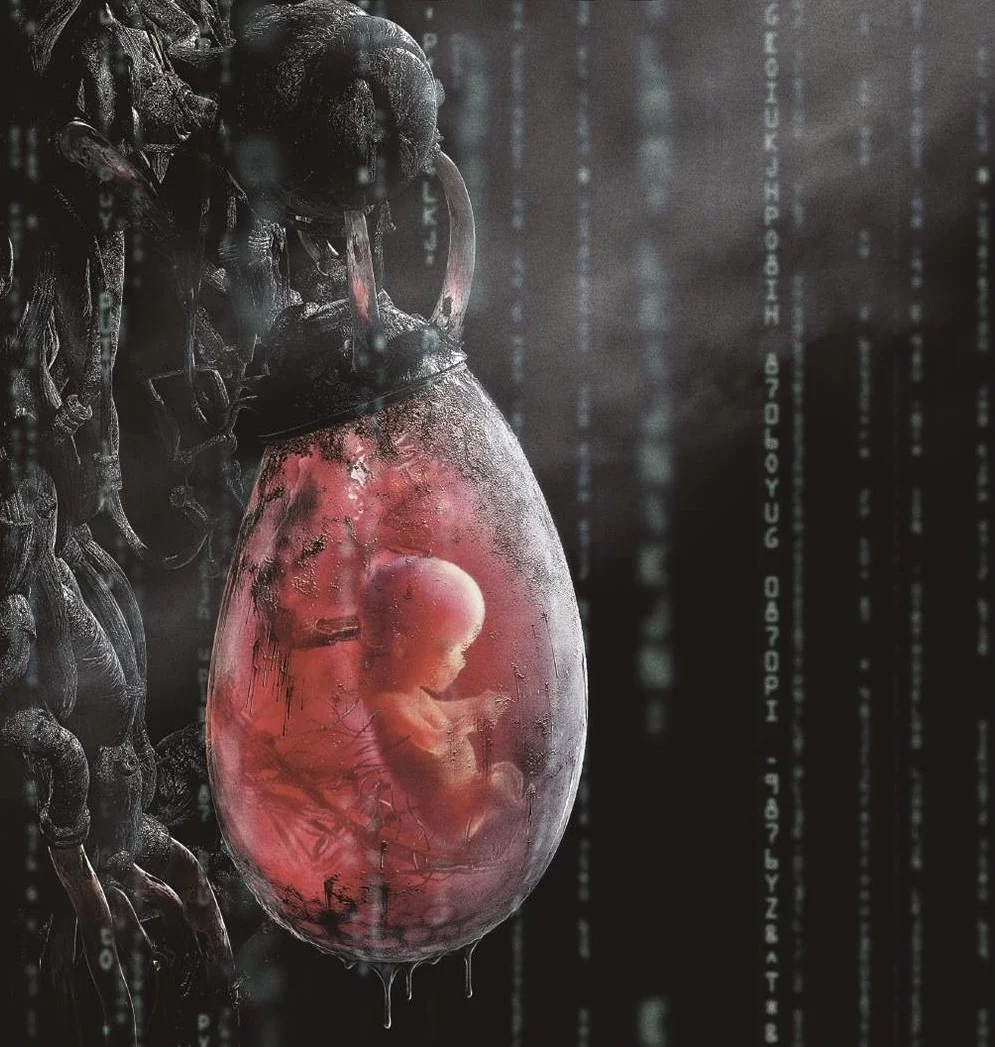
Buddha’s first and most powerful lesson in his teachings is, “Know suffering.” That doesn’t mean that we should suffer. It means we are suffering. And until we realize this, we will never try to break free from that suffering. If we are incapable of understanding that we are enslaved, why would we try to break free? The cattle grazing on fields near the highway have no understanding of what’s in store for them. No idea that they are, basically, food grown for humans. Organic batteries in our Matrix.
Willingly. Happily.
Music, art, literature, dance… any creative exploit…shows us reality, often by breaking away from what we think reality is. It sneaks behind us and backstabs while we hold our shield up and focus our attention ahead. It has the power to seep into our awareness, no matter how closely we guard our thoughts. It is our conscience. It is our kindness. It is our empathy. And, like the word empathy itself, the arts are being discredited, cheapened, redefined.
Take away the humanities, and we lose our humanity. Look at Adolph Hitler, who was an art student before diving into politics. Just look at what happened when he turned away from art. Okay, I know, kind of a tortured argument, but I went there.
When we give away our ability to create art and literature and music, we give away our histories, our hopes, our dreams, our morality, our ability to inspire others. We lose our perspective on the world and how it could be different. We lose our ability to say, “No, this is wrong, and we need to change it.”
We become cattle grazing near the highway.
We strap ourselves into the organic battery pod, suck down the blue pill, and simply cease to be.
Rage, rage against the dying of your mind.